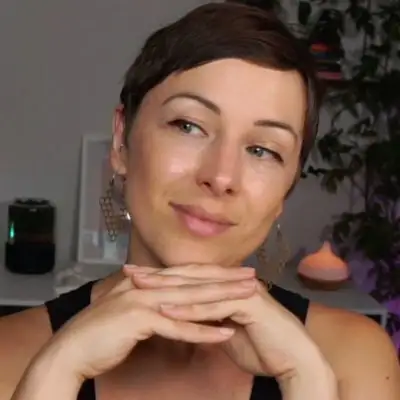
The Imperative of Joy with Lianna Patch
You're listening to Grief and Pizza, a podcast exploring the highs and lows at the intersection of business and emotional well-being. In this episode, we chat with Lianna Patch, a conversion copywriter, stand up comedian, and the founder of Punch Line Copy about why humor isn't just a nice to have, it's a lifeline. We get into the messy real side of creative work, navigating depression, burnout, and the existential weight of AI on our craft. And we talk about how structuring your time, honoring your energy, and giving yourself permission to be funny might just be one of the most radical acts of self care a business owner can practice. What's the stuff that you are most lit up about right now?
Marie:What are you working on?
Lianna:Well, there's this existential battle between AI and creativity, I think, and or that's happening in the eyes of capitalism, maybe not in the minds of creative people. But I did make this thing, and I love making physical products. So I made this little deck of punch up cards that's basically like come up with more fun ideas, refine them in funny ways. And then there's a category that's just like, you are stuck, do some jumping jacks. Read it out loud as Morgan Freeman or Batman.
Lianna:Like, go for a walk. Pet a cat. Call a friend. You know? And just this morning, someone who bought one is a friend of mine and he texted me and he was like, I've been using them all week.
Lianna:And I was like, wait, really? I'm delighted by this.
Marie:You're like, real people are actually using my products. Yeah. What an amazing feeling.
Lianna:Yeah. I did know that, you know, most of the time when you buy a card deck, it just sort of sits on your desk and looks nice and gathers dust. And so that is on the cards. Like, the instruction card is like how to use this deck. Yeah.
Lianna:Leave it on your desk together.
Marie:The process like to bring that to life? Was that pretty intensive? And, like, had you been thinking about that for a while? Like, how did that even happen?
Lianna:Yeah. I was working on it for a long time, of way back burner. The process started by thinking about, like, am I doing without thinking about it when I'm coming up with ideas, when I'm refining a piece of writing, and how do I personally like to shake out the cobwebs? And so I just started taking notes about all of that. And then I had a really ugly Canva version of it and then had to hire somebody to make it look nice.
Marie:Amazing.
Lianna:Yeah.
Marie:Yeah. Very cool. I know one of the well, some of the topics that you've mentioned maybe being curious about talking about were death, depression, anxiety, and Tibetan Buddhism, and what it teaches us about those things. And I
Lianna:Yeah.
Marie:I really wanna dig into this, and also just the relationship between, like, comedy and humor and the sort of darker sides of things and kind
Lianna:of that relationship.
Marie:So, like, where do you wanna start there? I I'm just kinda curious to hear even, like, your experience with Tibetan Buddhism or, like, your background there. I wanna hear about that.
Lianna:Man. Well, I was introduced to it, I think, in 2013 by a dear friend of mine who's been practicing for way longer than me and was sort of meditating on and off throughout the years. Have never really been able to get into the, like, storytelling side of it, like all these gods and how many arms do they have and when do they descend from the sky to wreak havoc on you and that stuff. But the the philosophical side of things like Buddhist principles make a lot of sense to me. And I think when I have been at my worst depressively, I'm sort of looking for, acknowledgment that everybody feels this way and that it is a known issue.
Lianna:And so the fact that the first noble truth is life involves suffering. I was like, okay. I can roll with this. Like, as long as that is the table stake that we're all handling, y'all seem to know what to do about that. Yeah.
Lianna:That was how I got into it.
Marie:Yeah. It's sort of a feels like a touches on a universal truth. And you're like, oh, we all experience a little bit of this. And what does that mean?
Lianna:Yeah. And how funny that there's this corollary with, you know, copywriting in the most effective sentence and copywriting being you are not alone. You know? Yeah. You are not the only one who is struggling.
Ben:Yeah. Yeah. Marie and I were talking this morning about the primary through line in all of your work is humor. And we were trying to figure out our senses of humor. Where's the origin of that?
Ben:When did you discover you were funny and how how did you can you do you have a story for that? How it became such an important part
Marie:of your work?
Lianna:I had to get permission to make it part of my work. I was interviewing people running an improv school, and they were like, you should come try improv. And I was like, okay. And then I loved it. And I had already been doing stand up because I went to an open mic one night, and I was like, oh, this is the bar, and that's such a douche way to think about it.
Lianna:Right? Terrible. I could do so much better.
Marie:That's gutsy.
Lianna:Then I was I was in Joanna Weeb's first copywriting mastermind. And I was like, man, I wish I could just merge these two parts of me because I have this, like, mask that I put on to be, like, professional editor. At that point, I was really just an editor. And like but over here, this is I'm having so much fun with this, and I have this one project that lets me be this person. And she was like, why don't you just do that?
Lianna:And so it started with that idea of permission, which is now something that I try to instill in, you know, students when I have them in a course or clients who reach out for work. It's like, you get to do this. You get to have fun. That's like the groundwork.
Marie:I can even say, I think this morning I was telling Ben that I feel like that was one of my biggest takeaways from your course was it was just permission to let a little bit of my humor through because there's that idea that as a business professional, we have to be very serious. And then when you're dealing with larger audiences too, there's this, like, I must appeal to everyone. And you're still trying to find your niche, but for some reason, humor feels a bit, like, taboo somehow. And so taking your course, I can remember one of the changes that I made was kind of naming that this course may not be right for you if you're afraid you might be in a cult or something like that. It's like we're naming the thing that people were talking about with Notion feeling like a cult.
Marie:So it's like we it took a bit to kind of give myself permission to say, what if we just had a little bit of humor with it and and name the thing? And so thank you for giving me permission to go there.
Lianna:Example. Yeah. That's where I often tell people to start is like think of the objections that someone might have to what you're offering and selling and then make a joke about that that faces it directly and for some reason that just sort of defangs it by bringing it out in light.
Ben:Yeah. This happens a lot I think in business stuff, especially with Marie and I because we're constantly sharing our screens and things kind of just appear and kinda have to roll with it. And I was thinking about we had a friend who really hated brunch, you know, for various reasons. And he sent a calendar invite one time saying and the event was called fuck brunch. Yeah.
Ben:Because he hated brunch so much. Right? And Marie shared this in one of her writings one time, a screenshot of her calendar and and it just happened to be on there. And somebody responded that I don't know what kind of weird shit you guys are into, but this is beyond the pale. Thinking that we're it was a an orgy instead of a Yeah.
Ben:Statement about So that was one of those times where you're just like, oh, okay. Like, I understand where this person is coming from, but okay. It's humorous. Right? And we did a live event last week and during the presentation, somebody just unmuted their mic and was talking about their eating at a seafood restaurant.
Ben:And so I immediately jumped into making that part of my presentation. So we started we started planning my hanging out with this person and you know, the oh, we're gonna be getting seafood, so I'm looking up a seafood place in San Francisco, and then I'm sending her an invite or whatever. And, you know, it just became part of the Yeah. The joke for the rest of the presentation. So I, you know, I enjoy those kind of things because, you know, it either your live thing is disrupted and you're kind of like out of sorts or you just incorporate it and make it fun and and laugh about it as you go and, you know, everybody has a good time and that person's like, oh, oh, dear.
Ben:But
Lianna:You save everybody from that sort
Marie:of
Lianna:collective, like, cringe. I feel like we've all had those moments where, like, the future diverges very widely. Like, I could roll with this and make it funny or I could stop everything and make a really big deal and everyone would sort of punch. Yeah. You know?
Ben:How do you make that distinction when you're working with a client in kind of figuring out where their funny is and where the line is for that client specifically? Because I assume that it's very different for every person and they're not gonna sort of have the same level of silliness or something that you might have. So what's the work look like to actually figuring out how is this person funny? Are they funny?
Lianna:Man, it starts with the first outreach. So I do no marketing, so it usually starts with someone emailing me. From that first email or intake form, I can tell, like, with a good degree of certainty, is this person gonna be fun to work with? Like, if you are taking yourself too seriously in an intake form or if you have a comment about how long the intake form is and you're very important and it shouldn't be that long, like, get the fuck out of here. You know?
Lianna:But sometimes people are just, like, joyous in their outreach, and I'm like, oh, great. I would love to work with you. And then it turns into a conversation about what do you find funny? What comedians would you buy tickets to instantly if they came to your town? Do you even like stand up comedy?
Lianna:Have you done improv? Where do you find play? And that's not like not just jokey humor, but like intersection of play and joy. And that's a big thing that I've been thinking about lately, because as I've gotten older, thought more about suffering and death and that whole side of the stuff, like I'm trying to figure out how to bring in more joy in general. And joy is like a huge encompassing container of everything that makes you lighter.
Lianna:Because I feel like the thing that I've been saying so often recently is, like, we have to have fun because we're all gonna die. You know? And that feels very close. Not like soonness for me, hopefully. Yeah.
Lianna:Like, it's immediate in a way that it wasn't when I was younger.
Ben:Yeah. One of my favorite pieces I wrote last year was just called fun. And I was commenting on the game Velatro, which both Marie and I love to And and a lot of people say, and I remember writing that piece in relation to somebody say, you're going to lose a lot of productive hours here in this game. And I was just like, so it's fun. And you had responded that you were at the time, you had been working on a talk called the Imperative of Joy.
Ben:I'd love to hear more about that because when I heard that phrase, immediately was elated that other people are thinking about this. That it's it's almost like profit first, but I have started thinking of fun first. How do I make this fun? That is a really motivating thing for a lot of people and I think we discount it a lot. What does that talk about?
Lianna:I remember reading your fun piece and was like, yes. We're we have the same brain. I wrote the talk. I I made the talk with the help of a speaker coach, and it doesn't feel right to me, and so I haven't shopped it around. I think I have to remake it, which is a devastating realization after spending so much time and money and effort on it.
Lianna:But I have this, like, document of notes about joy and, like, there's you know, I have my notes from my weekly sangha. We talk about what does Buddhism say about joy. I have a little Post it from Joe Hudson, who I think you had on the podcast here.
Ben:Mhmm.
Lianna:He says joy is the matriarch of the family of emotions. She won't come into a house or her children are not welcome. So you gotta feel everything before you can get to joy. And, yeah, I'm trying to figure out how to share this feeling that it is so crucial in a structured way that makes sense. So, like, the talk is not ready yet, and I'm just sort of, at this point, collecting pieces to see if it will take shape.
Lianna:And if I can be brave enough to look at those pieces at some point and work on my own stuff and let it take shape. You know?
Ben:It's so interesting that you come from this background of of improvisation, and you're saying, how could I make this structured?
Lianna:Yeah. You know? Interesting. How to make it make sense in a way that is not me going joy is important in, like, minutes on stage. Kind of what I'm doing right now.
Ben:Yeah.
Marie:Yeah. Like, are you are you looking to tie it to specific audiences? Like, I know you've done a lot of talks in the software world and product space. So are you sort of trying to find the through line that connects it to, you know, a certain audience or niche? Or what's the
Lianna:The through line, it might be actually what's sort of getting in the way, which is that I am trying to create a sellable keynote, a customizable sellable keynote. And obviously, like thinking about it as a product first kind of takes the fun out of a little bit, you know, even though I love
Ben:to products.
Lianna:Yeah. That's probably part of it. It's like, can I sell this versus what do I really wanna say?
Marie:I could almost imagine you telling that story in your talk where you're like, and so I was like, how do I sell this talk about joy? Which, you know, I could actually see that being part of the story of it. Right? Because there is kind of a funny irony there a little bit.
Lianna:And then, like, the slide behind me turns into a picture of me on stage at that that moment, and then it does that, like, spiraling thing. And everybody in the audience is like, what's happening? Sounds great. People definitely pay for that.
Marie:I'm sure whatever you end up delivering will be really, really interesting. Have so many questions that I'm so curious about that that idea because I think I've always I'm not a speaker, but I've spoken at conferences. So it's when someone invites me, I'm like, oh gosh. Gotta get a talk together quick. Put something together.
Marie:So I think it's really cool the idea that you're like, this is what I wanna talk about. I'm gonna, you know, put that, like, thought leadership piece together first and shop that around. I think that's really cool. Like, have you done that before where you you come up with the talk first and then you shop it? Is that a usual strategy, or is this one kind of new for you to do it in this way?
Lianna:In terms of looking at speaking as an income stream. And this is definitely the pressure is on because of AI. Like, luckily, my business has not materially changed. My income hasn't really changed yet. Maybe it won't.
Lianna:I'm lucky in that my niche is really defined. Right? And, like, especially in software, you can't just feed that to Claude because it's like, I made some stuff up. And it's like, no. You can't can't do that.
Lianna:You can't just send bad features. But it does kind of seem like if things keep getting better, is there a need for me? What will my work look like? And for now, you know, they're not gonna, like, be sending hologram speakers around to conferences yet. So that should be a safe niche to get paid through.
Ben:There's also a kind of mirror in performance and entertainment that, you know, not everybody is funny. In fact, most people aren't that funny on the spot or as performers. Maybe in in private, they're funny or they have moments or specific styles of humor that are work for them. But in terms of a regular performance that you're doing as a paid thing Yeah. There's always gonna be a need for the actual body to be performing.
Ben:And the there's so much of so much of comedy is part of, you know, the expressions, the movements.
Lianna:Body language.
Ben:Yeah. The body language that I think is not gonna be as present with just the written word. What's your favorite sort of genre of of comedy?
Lianna:Oh, man. I can tell you my least favorite.
Ben:Okay. Start there.
Lianna:Like, I think you should leave anything Tim Robinson, but I just I have enough of that in my life. It's one of things I like.
Marie:I do not need
Lianna:to feel that way more.
Ben:Yeah.
Marie:That's so funny.
Lianna:I also really love absurdity. So, like, the way that I tell clients also to think about it is if there's a universal sense of humor, it's like wholesome and goofy, you know, animals and babies falling down and, like, you know, slapstick where people don't actually get hurt. And that transcends language and culture, I think. Like anywhere in the world, a cute dog GIF is gonna be a cute dog GIF. But absurdity is much more a matter of personal taste, and that's where you're expecting a punchline.
Lianna:And either it doesn't come or it's just so radically different that, like, you kinda make this face and that's and then you laugh at yourself for making that face or for expecting something different. And it's so hard to do. And I just love that when it's done right. Yeah.
Ben:I was thinking of maybe Douglas Adams, something like kind of political and social satire, but it's really kind of scientific and but very absurd in terms of, know, it's just kind of feels random at times, the plot of the Hitchhiker's Guide or you know, Dirk Gently or something like that where there's an aspect of randomness and absurdity as part of the actual narrative in some I
Lianna:love that you brought that up because yesterday on Reddit, of course, I spent way too much time on Reddit, somebody quoted Hitchhiker's Guide, and it's a perfect example. He wrote, the clouds hung in the sky exactly the way that a brick wouldn't. Perfect example of, like, what the
Marie:Yeah.
Ben:Yeah. In terms of AI, how is it impacting your work right now? What are you what are you seeing your fellow copywriters doing differently? I mean, I know Joanna Wiebe herself kind of went in that direction a little bit. I like to ask people, know, what's the good, what's the bad for you?
Ben:Because I think more and more as the models are getting better at producing sort of realistic passable content and code Yeah. That people are more accepting of using it, but also I still think that there's the aspect of the impact of changing all these jobs over to machine code that's gonna have downstream effects that people aren't really talking about. They're mostly talking about is it good, is it doing a passable job of writing copy and not kinda going to the what would it mean for everybody to not need a copywriter anymore.
Lianna:Yeah. I mean, I feel like a lot of people have just straight up lost their jobs. Like, you were a copywriter if you were a content writer, you lost your job with, like, the first mainstream iteration of ChatGPT. I've noticed that a lot less of my client base is ecommerce, and I think that's because passable copy is enough when you're sending a lot of traffic. Like, they're very focused on top of funnel.
Lianna:And so they don't have to have a 50% conversion rate for a demo because they're sending, like, 3,000 people a day. Right? Not 30. It's easier to describe a product usually with Chat Cheap Teeth than it is a software product that might be really complex or have different use cases or different industries or whatever. Yeah.
Lianna:I mean, I use it. I wanna be aware of what it can do. Historically, I find that LLMs aren't that funny yet. They've gotten a lot funnier. But especially when you ask them to do certain things, they just sort of drop the ball.
Lianna:Like, you can ask an LLM to be punny, and it will just be like, here you go. And it's not a pun. And you're just like, that's not a pun. Do you know what a pun is? You're absolutely right.
Lianna:Let me try it, you know, and then it serves you up another steaming pile of shit. So in that regard, still safe. I do I am trying to embrace it for the the, like, lower res stuff that doesn't matter as much. So, like, can I get you to draft an outline of this internal email? You know?
Lianna:And then I'll go through and tweak it. But I am very much with the people who are like, we need to stop letting it think for us. Mhmm. Because I do notice that when I rely on it a little too much, this was, like, 2023. I was using it a lot in the spring.
Lianna:And I remember thinking like my brain just feels so flabby, you know, and like, maybe that's depression. Maybe it's Maybelline. But like
Ben:Yeah. I think a lot of people have been writing even in the last since the 04/06 release really because I think Opus four six is kind of, it's gotten people to turn their heads a little bit including devs that are able to do so much stuff with coding now, specifically coding. Quite adept at at these kind of things and so I think, but I think a lot of people are burning themselves out because it can do so much and so it's sort of we're filling the space that we have with more work and so you see these people writing these things saying that they're working eighteen hour days all of a sudden because there's so there's so much opportunity to build and and but they're also burning out really hard because it's a different type of cognitive load to review and audit things than to create things.
Lianna:Yeah. Don't wanna
Ben:And the thing that I'm noticing is that I'm less good of a reviewer and an auditor if I haven't participated in the thinking work myself. So So I could do this faster by using a tool. It's the same thing with automation. Know, once you've automated something, you don't really look at what it's actually doing anymore. You're just evaluating did it do the thing that I wanted it to do?
Ben:Yeah. And so I think, yeah, people are becoming auditors and I keep keep seeing these words, judgment and taste, that we're now becoming taste makers and Yeah. And judgers of things rather than creators of things. Yeah. Which I think, if comedy's any indication, that feels kinda safe to me because I think a lot of people are actually quite quite bad judgment when it comes to what's funny.
Ben:Yes. Yeah. Versus what's cruel or, you know, I don't Yeah.
Marie:Yeah.
Lianna:Which I think is the main risk of LLMs doing comedy. It's just digesting. I wrote an email about this actually, this weekend. I never emailed my list, but I happened to on Saturday. And I had the same conclusion, which is just like discernment is now the key factor in creating good.
Lianna:Yeah. If it's trying to be funny, it's digesting what anything on the Internet is that's been labeled as funny and giving you the sort of like blended, watered down, like clump. And every now and then it'll hit on something that could be good. I will have it create a list of associated phrases like I'll have it do the brainstorming stuff for me. There's a way of writing jokes where you just like sit down and think brainstorm a bunch of associations for a word or a phrase or a topic or whatever, and then you see if any of those play well together.
Lianna:So I'll have it do that instead of just like sitting there and typing. And that's where I'm like, am I am I making myself dumber by not thinking of these things myself, or am I saving my brain for the work of making those improv connections?
Ben:It's yeah. It's interesting. I think Marie and I were talking about it. When you see something kinda cut through the noise, comedy wise, I'm curious who are some of your favorite comedians? Marie and I have been obsessed with this ventriloquist performer, Nina Conti.
Ben:She has been performing with a monkey Oh. Like puppet for years and she's incredibly good at the ventriloquism. So it's it feels after a while that you're actually watching two performers. Yeah. And she has this sort of meta series where she does therapy with another improv performer and with the puppet and it's very funny and and the idea of you know, actually performing as a another entity or whatever is, it's was pretty novel and I hadn't really seen any kind of ventriloquism in years and she's kind of trying to keep the craft alive in a sense, but it's so unique.
Ben:Those kind of things are really appealing to me comedy wise. You just don't see that kind of stuff. I'm curious. Do you have a comedian or a set of comedians that you really think are are doing something like that?
Lianna:I really love Maria Bamford. Mhmm. And I don't know that I love her comedy as much as I love her writing. I just identify with her a lot and that she's like, life is very hard. It is hard to be in my brain.
Lianna:And, also, here's this funny thing I noticed. She's very she's this perfect blend of, like, absurd and observational humor
Ben:where
Lianna:she's like, isn't it weird that? And then you're like, oh my god. It is so weird. And she's just goofy, she does a lot of, like, what I think of as breaking the fourth wall in her writing. She wrote a book called Sheryl Join Your Cult, which for notion people.
Marie:Well, it's her book recommendations. Yes.
Lianna:It's the best because I've wanted to write a memoir for a long time, and I, like, have started writing it. Like, who fucking you know, who do I I don't have the experiences that are meaningful. But she does this thing where she's got, like, a key, like, a legend in the book of little symbols and icons you can refer back to. And so she'll just, like, have this shorthand where she put this little trash can by the end of a sentence, and you know that this means, like, she didn't actually mean it or, like, it's just such a fun way to play with the idea of what a book can be. And so I love her for that.
Lianna:I like, Eliza Schlesinger for her stage work. Like, she really
Marie:Yeah.
Lianna:She does a lot of, weird character work. Yes. Like, I am making it back. You
Marie:know? I
Lianna:do a lot of that. Who else? Ali Wong. I'm naming all female comedians
Marie:on Fantastic.
Lianna:Ali Wong has gotten like, she's very raunchy. She said some stuff, but also really, like, appreciate that. There's a a breakdown of one of her specials by this website called Pudding. Have you heard of pudding.cool? No.
Lianna:They do this visual representation of her stand up special. They map out which topic she's talking about, and then at the end, they show how she meshes them all together for the biggest laugh. And it's like, yes, I have this itches my brain in such a nice way.
Marie:Oh, I love that's like the structure underneath the humor, right? Exactly. Yeah.
Lianna:And there's stuff about that with improv, too. There's some amazing improv performers out there. Yeah.
Marie:I love that. Oh, dropout. Familiar Sorry. Dropout?
Lianna:Have you all watched dropout? The it used to be Funny or Die, and now it's dropout.tv.
Marie:Oh, no. Oh my god. You heard
Lianna:it here first. You've probably seen clips of the show called Game changer on Instagram. It's just like some of the most talented improvisers you've never heard of doing an improv game show, and they have a bunch of other shows, but Game changer is their most famous. And it is
Ben:I think I've seen some clips where they kinda give you a a premise and you have to act it out sort of whose line is it anyway types.
Lianna:Yeah. Very much. Short form improv. Yeah.
Ben:Yeah. So impressive. I like that stuff.
Lianna:Yeah. Anyway, what about y'all? Who do you like?
Marie:I was just thinking Andrew Russo came to mind as that, like, someone who takes, like, something so insanely mundane and names it and then does a whole freaking TikTok skit where he's talking to himself as these different characters. But Oh, yeah.
Ben:Four, five characters. Yeah.
Marie:For something that's so so small. Yeah. He did one on, supplements. Right? And they're like these two bros that are, like, out supplementing each other.
Marie:They're like, oh, well, know, are you taking your, like, grasshopper powder, whatever? And it just keeps getting crazier and crazier, and it inspired a birthday present for Ben. So I made him sup bro, and it was like a supplement kit with all of I made my own labels, did a custom brand for it, and got involved with all candies and things like that. And I was like, I don't know if Ben likes this, but I'm having a great time. I think this is pretty funny.
Ben:It makes me laugh because now all of our normal spices and stuff are in these labeled canisters. So I'll be like, can you pass me the manatee flipper powder, please?
Marie:Praying mantis dust or Yes. Every time I open the cupboard, like I laugh when I see it. Right. It's like such a, I think about all those little times that a comedian or someone had one little joke that then makes its way into your everyday vernacular. And then like ten years later, you're still saying that line, like what power?
Marie:It's Yeah.
Lianna:And also, like, look at what a fun new way you found to bring joy into your everyday lives. I wanna do that. I wanna relabel all my spices right now.
Ben:Yeah. Always makes me laugh.
Marie:Yeah. I think that, I don't know what you call it. It's like the yeah. Pointing out the insanity of the everyday mundane or or a thing that you thought was so small, but someone names those a thing, and you're like, someone else's brain also thinks about that. And Yeah.
Marie:You feel so connected somehow.
Lianna:And there's a tie in back to Buddhism here, isn't there? Because if you are noticing these things, you are being present in the moment, and you are noticing the noticing. And I think for me, the challenge is often like, can I notice this in a way that is funny and joyful, or am I noticing it in a way that's like, oh god, everything does?
Marie:You know? Yeah. Drugs. Yeah. Like Can you yeah.
Marie:Can you talk about a little bit more your relationship with depression and humor and kinda how how do you get work done when you're in one of these places? Or, like, do you take time off when you're in a funk or sort of does is humor a way to kinda cope with that? Like, what is your relationship with this ebb and flow of anxiety and depression and still having to pay the bills?
Lianna:Yeah. It's hard. And there's a lot of self flagellation in there because I think in my mid to late twenties, I was just like hustling. And then I had a pretty big depressive breakdown in early twenty twenty one. And the core of that was deciding that I was a good person.
Lianna:And I think like a lot of my hard work was rooted in thinking I'm not a good person. I have to work hard and something. And then I was like, oh, I am a good person. And I sort of lost a lot of my hustle, I think, at that point. And so I've tried to design my business in a way that supports however the fuck I wake up feeling, which sometimes is unpredictable.
Lianna:It mostly works. I build in a little extra time into project timelines. I sell a day rate day, and I try not to schedule those days on weeks when, like,
Marie:I might be in my luteal phase and, you know I love
Lianna:I'd be real mad at everyone. Yeah. It's still kind of a work in progress,
Marie:I think. Could we, like, zoom in on that little part that you just said? Because I think we don't talk about this enough of how our menstrual cycles impact our energies and moods and cycles. You know, I've talked before about this. Like, men have a twenty four hour cycle.
Marie:Women have a twenty eight day cycle generally. Do you really schedule your your stuff around this? Like, are you quite intentional about it? Because I think a lot of people could probably benefit from being a little more mindful about those cycles. So is that a real, like, I will not do my VIP days during this week.
Marie:Like how, how seriously do you take it, I guess?
Lianna:I take it very seriously. I have a calendar event that goes every twenty eight days and I used to invite my now fiance to it until I realized he was not he didn't care. I was like, you should see that it says luteal likely on the calendar and be extra nice to me. But I like I I struggle with talking about this because I don't wanna play into the, you know, stereotypes of human beings. Emotional and uncontrollable, but it is a real thing.
Lianna:Very frustratingly, an ex of mine after we broke up was like, yeah, you are like a different person every two weeks. And I was like, no. It's just because you're stupid and bad. And I was like, oh god. He was right about everything.
Lianna:Damn it. Corey, if you're watching this, I'm sorry. So if you have predictable cycles, I think it is helpful. And if I, you know, I try to just have that week be a light week, like no calls. Although I find that if I have to go to a call, it can change my whole mood.
Lianna:Right. Because I have to show up and fake it. And then by the end of faking it, I'm like, oh, maybe life isn't so bad. And then the sun goes down and I'm like, oh, life is terrible.
Marie:It's all bad. We're such fragile creatures. Are we? We're like, how's the sun today? Like, where's my cycle at?
Lianna:What's happening? Three days in a row here in Austin, Texas, where it's sunny, like three hundred and fifty days of the year, three days in a row. I'm like, what is I'm not even getting out of bed. Oh my gosh. I'm getting out of bed, and I'm going straight to Reddit all day.
Marie:Yeah. What is your time and schedule breakdown? Like, how many of these sort of VIP days are you doing or spending time building your talk? Like, as an entrepreneur, often our days are so unstructured. And so what kind of structure do you give yourself?
Marie:Is it pretty much like, let's see how I feel today? How do you think about the way you structure your time and energy?
Lianna:I live and die by my calendar, so I have time blocks for everything. And what I find works best is not overbooking, making sure I have a weekend, which often I work on Saturdays, but that's like my day for working on my own stuff when no one is watching me. I love to work on Thanksgiving and Christmas for this reason, too. It's like nobody expects anything from me. Look what I can do.
Marie:No emails are coming in. Yeah.
Lianna:Yeah. Exactly. I try to keep calls to the first couple days of the week. And then I have I usually have, like, one part time retainer clients and then either a day rate day once a week or a longer term project going on. So, like, right now, I have a project that I'm working on, so I'm not booking any day rates until that's over in late March.
Lianna:And, like, I make less money this way, but I also hate my life less this way.
Marie:Yeah. Yeah. How long did it take you to, like, find those rhythms? Because I feel like this stuff takes forever. It's still not straightforward.
Lianna:Yeah. I have I've had a couple really good coaches who are good at observing me and being like, hey. So respectfully, like, what if you didn't do this thing to yourself that, you know, hurts you? And I'm like, shut up, Charlie. I do it anyway.
Lianna:It's taken a while. But, yeah, I have another coach at the moment who's like, so last time you said you wanted to take Fridays off and just read and journal. I was like, yeah. But she's like, what if she was right? What if that version of you was right?
Marie:I'm curious your relationship with this too, because I think it's so, so powerful to have coaches, therapists. Yeah. But then there's also that, like, don't tell me what to do. Like that tension of like, I know I said that, but also, like, I know me better than anyone, and I wanna do this thing that's giving me energy right now.
Lianna:Yeah.
Marie:So, yeah, curious your relationship with that and even the kinds of coaches that that maybe you've worked with because different coaches have different specialties. So, like Yeah. What is that relationship look like right now for you?
Lianna:Right now, I basically have this coach who is essentially a therapist and I love her. And I'm like, please don't leave me. I think I've found success with coaches who encourage me to ride that sort of wave of momentum and inspiration. Like, how can I get out of my own way to do the thing that I wanna do right now instead of coming up with excuses why I shouldn't or I don't have time or it won't work? You know?
Lianna:Is it as simple as, like, buying a tablet that I can write on because it's annoying to find a pen sometimes? And, yes, that worked for a while. So, yeah, anything prescriptive, even if I prescribe it to myself, I will instantly reject. You can get your own mind so well and then just be like, are you a toddler?
Marie:Tell tell me what to do. We say that all the time. Yeah. It's like even if even if I know it's a thing that I wanna do, I just don't wanna be told to do it.
Lianna:I'd so much and I I have not been diagnosed with ADHD, but I identify a lot with strategies where it's like, okay. Think of how excited future Lianna would be if you meal prepped. That would be sick. You know? Instead of just like, I don't wanna do it.
Lianna:Like, just start for ten minutes. Future Lianna will be so happy that you worked out. I don't care about her. She sucks.
Marie:It well, it's like a wild put in dialogue we're constantly having with ourselves, and you're like, don't pick up the phone. You know, this isn't good for you. It's just like every day is a constant little like
Lianna:Yeah. I hear there's other people who just, like, live life. It's quiet in there. And I have the same song repeating over and over.
Marie:Who are these people?
Lianna:I don't have many of them in my friend group.
Marie:Yeah. I feel like I have way too many neurodivergent friends that I'm I'm like, isn't this isn't this just how everybody is?
Lianna:Yeah. We just talk to each other. Yeah.
Ben:Yeah. Yeah. How do you act as a coach in your business?
Lianna:No. Do I act as a coach, like, for other people or for myself? Yeah. For other people. Oh, man.
Lianna:It's so easy. I can only ever see the upside for them. I'm so psyched for them. I've had copywriters, independent copywriters as my coachees. And I think my biggest piece of advice for them is usually like productize your services, make it much easier to buy from you.
Lianna:But then it's like, hey, what if this? Hey, I see this in you. What if we emphasize that? And it's it's so fun to just get to have all the ideas and make someone else do all the work. Yeah.
Lianna:I don't have any coaches right now. I think I emphasize that offer more when I'm feeling more confident in my own business.
Marie:Interesting. So does it depend on how much business you're getting or is it like mood based that like sometimes you just feel a wave of confidence and sometimes you don't? Like, what does that look like?
Lianna:That's so mood based. I was telling my coach, I was like, I'm pretty sure I'm like massively behind in terms of revenue year to date than I was last year. And then I looked and I was like, no, actually, I'm gonna be ahead. Like, what? It's just Just a feeling.
Lianna:You know of Ramit Sethi. Right? Says the way you feel about money is massively uncorrelated with how much is in your bank account. And so it's just like, I've made all of this up. This isn't a problem.
Lianna:But it feels scary.
Marie:That could be applicable to so much beyond money. This is not a real problem. It's something I've made up in my head.
Lianna:You guys have I I feel like your house, your home is so beautifully curated that you probably don't have Post it notes everywhere like an insane person. I'm prefacing this. Yes. I do. I do.
Lianna:And one of my Post it notes says, what if nothing is wrong right now?
Marie:That's the
Lianna:Drill that into my brain stem, please.
Marie:I think Ben, you've got a few on your ear monitor.
Ben:I have a bunch on my my monitor. There a lot of them come from the somatic coaching that I do. And one of them that I've been thinking about lately is where going back to the concept of joy is where is your joy being derived from other people versus from your own needs.
Lianna:Oh. I like that.
Ben:So, you know, the idea here being that I I sometimes struggle with getting excited about my work when unless somebody else is excited about it, you know, I'm trying to put myself in that seat a little more often. And a lot of the post it notes that I have sitting around are are my principles which we talked about Joe Hudson's work earlier with Art of Accomplishment. Marie and I did the Great Decisions course
Lianna:Right.
Ben:Which was really impactful in the way that I see myself and I think the way that Marie and I see ourselves in our work and an another one of my post it notes in front of me here is just the word pause. I have a tendency to hyper fixate and go into red light. Yeah. I go into the, you know, anxiety spirals. Mhmm.
Ben:And so, yeah, this note is there just to remind me to sit with the One feeling in the thing that I've been working on in the somatic coaching is what do these feelings actually feel like in your body when they Describe them and actually meditate on that and then you get to the point where possibly you see that feeling in your body arise before the thought comes to you. And the work that I do with my other therapist is where do you go from that point? So a lot of times it's getting into your body, getting physical, standing up and shaking it out or going for a run or, you know, I don't know, falling on the ground and thrashing or something, but something to get you into the body Yeah. When that happens so that you're really really present for those emotions and you can almost like slow the thought process down in a sense. So the pausing is sort of conscious, but also part of the you know, tripping the, confusing you a little bit or tricking you into not going into the spiral.
Ben:Yeah. Yeah. Because I think a lot of these feelings in the body just kind of come regardless of how you actually feel about the thing. Yeah. I'm actually safe.
Ben:I'm actually safe here, but my body is still telling me that I'm in danger and I need to be really really worried. So, yeah, doing some kind of nervous system regulation is a big part of of that. And so, yeah, like, all of my Post it notes are about regulating my nervous system for the most part.
Lianna:That makes so much sense. I did Johnny Miller's nervous system mastery course for this reason, right, where it's just like my body is attacking me even when I logically know nothing is wrong. I wanted to learn more of those physical ways to be present and calm down.
Ben:Yeah.
Lianna:And I think about a lot the concept of the second arrow in Buddhism, which is, you know, you're suffering. Don't punish yourself for suffering. You don't like, you've been shot by an arrow, you don't have to shoot a second arrow being like, god, I should have stepped away from that first arrow. Like, don't make worse. And I think a lot of that is tied into, oh, I feel so physically anxious.
Lianna:Why? I gotta figure this out. This is where is this coming from? I shouldn't be feeling Why are we
Marie:doing this again? Yeah. All
Lianna:right. You big dumb ape. Calm down. Deep breaths. We have
Ben:Last a year, I was pretty burned out for a good chunk of the year and just getting nothing done, and I definitely was heaping on the the shame and the guilt for being burned out and not being able to sort of like push through it and that happens a lot and going back to the AI stuff, that's kinda what I'm seeing a lot of people doing is self ascribed burnout and then how can I use tech? How can I use tech to get out of this burnout? There's gotta be a way and a lot of it is
Marie:Step away
Ben:from the that you actually can't Mhmm. Work your way through it. But it's really an uncomfortable place to be when you're used to being a technologist and the thing that you usually use to figure things out is not accessible to you any longer. Yeah.
Lianna:That makes sense or it's eclipsing you in some way and I think a lot of my personal stress would be alleviated if we had universal basic income
Marie:in this country.
Lianna:Yeah. But Yeah. Yeah.
Ben:Yeah. There's a there's a definitely a safety net kind of thing, which having grown up in The United States and now I'm a Canadian citizen, there's a whole different starting point of feeling secure in entrepreneurship for Canadians because I don't really think about what might happen to me if I were to have something catastrophic happened.
Marie:Yeah.
Ben:When I was running my business in The States, I got in 2009, I got really badly assaulted and I almost died.
Lianna:Oh no.
Ben:And the only way that I if I would have had to pay for my hospital bill, I would have had I would have been toast. Yeah. But, I was able to get, Washington State has a crime victims fund and they will, they'll pay for your medical bills, but if it was just something else, like a cancer diagnosis or you got hit by a car or something like that and maybe you were at fault and you're not supported by something such as a crime victims fund. Yeah. You know, those are business ending things that can happen to people and that's one thing that I feel as a Canadian, there's like a security net there that you can be a little riskier with your work.
Ben:You don't need to maybe earn as much because you don't have to have this massive safety net of savings ready for the most basic of emergencies, You know? So I totally get that, especially having been in lived in both countries for quite a while now.
Lianna:Yeah. And I think there's, like, along with all of that pressure, there's the, like, well, if I can't continue to make money as a self employed person, then, like, I am literally worth less. There's that tie in of personhood and economic value. Yay. Capitalism.
Marie:I mean, how do you find room for the joy and the humor when you're like, wow. It really feels like things are going to shit right now. When things get really, really dark, like, there lines even that you won't cross when like, with politics or stuff? Like, do you go there? Do you try to, you know, bring humor to it?
Marie:Because otherwise, you'd have to cry. What's your relationship with kind of the dark side of, you know, what we see happening and try to maintain your sanity and joy?
Lianna:I mean, humor is a coping mechanism.
Marie:Yeah.
Lianna:Right? And so I think that's where a lot of the, like, best insults about Trump have come from. You know? Not the only one I can think of is, like, you know, Cheeto and chief or whatever. But, like, the reason that people have so much fun insulting him is because it's like we have to make this ridiculous in order to live with it.
Lianna:That's part of it. And I think for me, like, it is joyous, this ongoing project. And I have to prioritize it even though the world we live in tells me that money is more important. Getting the next project is more important. Like, I don't have time to work out today because I have to finish these things because otherwise, you know, bad stuff will happen.
Lianna:And so that's why I calendar everything. That's like, okay. If I live by what's on my calendar, I should probably be okay after these workouts. You know, I'd have, like, little dance breaks built in maybe. What was the other thing I was gonna say?
Lianna:Oh, and I have, you know, this coach that I'm working with right now was like, okay, let's catastrophize. Let's do a worst case scenario. And it is really helpful for me to name and specify that ever present dread, you know, because if I can see that it's like the worst case scenario, I'm still not on the street. I might be living in my parents' basement, but like it's chill in there, you know, the dehumidifier going. It's not that bad.
Lianna:Really ganking girls, like, I'm sure we could fix it up, you know, like, I'll be okay. And that is the constant reminder. And I think the the practices of like going out there, taking a bike ride, taking a walk, petting a cat, like all these little things. I'm really into this idea of neuroplasticity that I'm sure you guys are well versed with, you know. And I read something the other day that was like, it's the Rick Hansen thing.
Lianna:Notice something good three times a day for five seconds. And within two weeks, you have rewired to notice more of the good. And I have really unconsciously wired my brain to notice all the bad stuff and fret about it. But my suffering is not helping, and it's actually making me less able to help. So I'm doing this project right now where it's just like, okay.
Lianna:Let the moment crack open, which is what Marshall Linehan says. I'm just quoting all these people because these are like a little library of wise people that I have in the back of my brain. Like, notice a good thing happening. Store it away in a couple weeks. Hopefully, be doing that more unconsciously, and then I'll be able to be more helpful, whatever that means.
Marie:Is that part of the imperative of joy sort of concept that you're working on?
Lianna:I think so. Because I I recommend, like, when you start to think about what's funny to you, you get to know your own sense of humor, your funny bones, or whatever. And so I think getting to know what actually brings you joy and codifying that almost, it it would be kind of the same process. Right? I used to have a little joy list up on my wall that was like going for walks, talking to a friend, eating nice food, drying you know?
Lianna:And it's all so simple.
Ben:Yeah. Yeah. We often don't really think about the gratitude side of things and I found a couple times where if I sit down and I'm gonna say, I'm gonna write things I'm grateful for for the next fifteen minutes and you could just go forever. So many things to be excited about and the little things and I find a swell of love and and happiness when you do something like that to really make it a practice to notice and name those things. Yeah.
Ben:But to the negative side of things, I've been doing this volunteer firefighting thing for eight years now and I see some really awful things and you become sort of a little bit hardened to it, but I I see a lot of the common pain of the everyday person that you never see on the surface when you're going into people's homes and you see them really really really struggling, whether it's from you know, illness or addiction or disability or anything like that. And that, it's hard to look at it and to confront it but what it has done for me is it has made me so much more aware of how much suffering there is in the world and how much people are struggling and it's gone to a more positive place for me because I'm able to really consider what is that person at the grocery store potentially going through at home because it's that classic thing of you really have no idea what the person is going through. So that kind of stuff, think a lot of times people will say that I'm really negative and pessimistic and I usually respond with, yeah man, like there's a lot of awful stuff going on right now, but that doesn't mean that I don't absolutely think that there is a possibility to actually do good work in the world, know, that's kinda what keeps me going.
Ben:But that you can't not acknowledge the depth of which we suffer as human beings with you know, you have to acknowledge that in order to uncover the joy. Another one of our guests, Barrett Brooks, one of my, he's also a coach, very interesting person, but he often says that the cost of joy is grief. Yeah. You have to be willing to feel the worst in order to feel the best.
Lianna:Yeah. Full spectrum. That's I've heard similar, you know, grief is the price we pay for love, and grief is just love with nowhere to go, which is very much what it feels like to me. You know how it is to lose a beloved pet. We don't have to go there.
Lianna:I'm not gonna cry on this podcast. I cry I cry constantly. But with, yeah, with that awareness of suffering, like, more my awareness of suffering has grown, the more my anxiety has grown. And I'm in looking into joy and bringing in more joy. I'm trying to figure out, like, much awareness of suffering is enough.
Lianna:Thich Nhat Hanh says, let in just enough to ignite compassion. And I'm like, okay. I have more than that. Like, I've got it all. You know?
Marie:Yeah. Now what? Now What do I do with this?
Lianna:Exactly. Yeah. Like, looking down at my notes, like, they're all right here. And the other thing I'm trying to live by at the moment is resign as general manager of the universe.
Marie:I like that. I love that.
Lianna:Just like, oh, are you trying to fix things that are objectively out of your control as one person? And you you often hear the advice to help where you can, like help in your community, which then you obviously are doing and have been doing. I'm sure you both are doing. And that helps you feel like you're having more impact. You have more control.
Lianna:Like, as long as I take care of this little circle around me and everybody else maybe does that, we could be on the up and up.
Marie:I think that's a change we've sort of been talking about recently, like, with all these changes in AI and thinking about, like, what does this mean for the the greater universe and humanity and people's jobs? And then it's like, okay. That's that's a lot. What am I doing in my local community? And so I think both of us, you know, Ben with the fire hall, and for me, it might be connecting with other local gardeners and even, like, teaching friends how to cook so that they can nourish themselves.
Marie:And there's, like, these smaller things that we're doing that really do feel like you actually get to see your impact Mhmm. In real time. So that idea of going more local, I think, has been really helpful for feeling like I'm connected. I'm Yeah. With other human beings.
Marie:I have a a purpose or an intention that I can I can really live out versus the mysterious anxiety about existential everything? Yes. General manager.
Lianna:Based from all over the world that you can't Yeah. Change, and you're just like, wow. That's bad. Wow. That's bad.
Lianna:Wow. That's bad.
Marie:It's just a lot of fist shaking. Right? That, like, is not necessarily helpful. So it's that how do you find just enough? And I think it sounds like we're all kind of in that struggle together of, like, okay.
Marie:I wanna stay informed.
Lianna:Yes.
Marie:But I also don't wanna be doom scrolling either. And, how do you, regulate that? It's really tough.
Lianna:And how do you can you see compassion as a superpower and not a weakness, which is something one of my teachers talks about. Like, you know, an open heart is a gateway to growth and helpfulness and, you know, enlightenment, really. But maybe at all the way open heart is just a gateway to unnecessary suffering and pain.
Marie:Yeah. And it's like the life's journey is finding that, oh, that's too much. Oh, whoop.
Lianna:No. Bring it back. And, like, the brinil phase, the gates are fucking helping all the way. Exactly. He exposed his gates.
Lianna:I can't deal.
Marie:Stop it.
Ben:Because that's where that Rewatching. Where that does discernment piece comes back in, I think.
Lianna:Yeah. Yeah. Exactly. Why is discernment? That is is it one of the fucking their Buddhism is just lists on lists on lists because it was an oral tradition
Ben:for so long. Yeah. It's kind of, I think, in tradition, the concept of right action.
Lianna:Yes. Yeah.
Ben:Where there's polarities and, you know, but there's a discerned action that makes sense for the given context you know, so that you're not following a prescribed law in the way that you act, but there is an awareness of the impact that your action has. And I think you know, with the AI conversation, there's very much like a dissolution of understanding in in terms of, I do this action and this is what happens. It's a very like one to one sort of deterministic way of looking at the world. And I think programmers are all kinda moving away from deterministic stuff to the probabilistic stuff and there's a lot more kind of cloudiness and vagary on what impact our work and our effort is actually having in the world. Yeah.
Ben:Maybe we have a very specific and intentional way of using the tool that enriches us, but then there's this kind of you know, ecological, you know, all the stuff that is downstream of large AI models and, you know, the corporatism that comes along with that.
Lianna:Yeah.
Ben:What does it mean to consolidate all of our creativity through one or two companies and where they're collecting rent from that, you know, the so that discernment piece of how we use the tools, I think, is really key for me. Yeah.
Lianna:Yeah. Yeah. Just like one of those. Goddamn it. I wish this were black and white.
Lianna:But Yeah. I use chatty PT to make more money, and then I donate more money to causes that, like, karmically, where is my balance?
Marie:Yeah. I think every individual using these tools is now personally kinda having to take on that, how comfortable do I feel with that? What are the edges? And it's it's kind of a strange thing that we're all kinda going through.
Ben:Yeah. I've had this conversation a lot and I'm working on a piece right now that's just called On Caring. I heard a podcast recently with two kind of tech guys that make software and I, in the middle of the podcast, I just rewounded and started over and I started taking notes for every time they said the word care. And all of the notes were I don't care, I don't care, who cares, why are people thinking about this, I don't give a shit, so what, it's awesome, I don't give a shit, like just over and over again saying that they don't care about what they're doing as long as they're getting the results they want and that to me is like some place where I think when we focus on the good all the time, the positive results for us, then we start to the edges of that, you know, the dark side are kinda pushed to the sides and we no longer give a shit per se, you know. Yeah.
Ben:And so like the caring thing is really important to me that I think we should still care about the impacts that the tool use that we're employing have in the world. And I think you know, the firefighting piece is just one way that made me realize that if I don't attend to the worst, then people will suffer and die if you're not actually caring about what's going on in people's lives. I don't know. It's kinda heavy, but I worry that people are starting to just say they don't care. That's something that I've been hearing a lot lately.
Ben:I don't care.
Lianna:Yeah. I mean, let's we could point to that being the reason for, like, especially a lot of social behavior post COVID, just like, well, it's me for myself, and I don't care. And Yeah. That's, you know, maybe why we have the current government we have here. Yeah.
Lianna:That balance, that discernment of, like, how much and what to care about, for helpfulness. Is it even a goal to maximize caring and helpfulness in the right ways or optimize that? Is that something that can be optimized or will it ebb and flow with emotions and capacity? And I've noticed recently that, like, I take all of this as like a problem to be solved. Like, okay, just gotta figure out my brain.
Lianna:Just gotta find the answer. And it's like, oh, right. Uncertainty is the only constant. Like, we're never gonna find it. Gotta live with that and also pay the mortgage.
Lianna:And people are like, how are you doing? And I'm like, I'm just gonna send them the link to this episode.
Marie:This is our future.
Lianna:If you don't wanna talk, let's not talk.
Marie:Always grateful to be able to, yeah, have these little more honest conversations about, like, there isn't always a good clean answer or what's next or how I'm thinking about this, that it's like, could talk to you in six months and you may have a very different perspective or feeling about things. But like you said, the uncertainty is is always constant. I
Lianna:would love to have a different perspective in six months. I feel like I've been stuck in this perspective for a good few years now.
Ben:I hear you.
Lianna:Yeah, people being like, how are you? And I'm like, kind of the same as the last time we talked, like just sort of existential floundering and they're like, I don't really know what to do with that. You used to be fun. Like I know. Wish I still learn.
Marie:I still think
Ben:you're it fun.
Lianna:Yeah. This you are my people. Please move 2,000 miles south and give up all of your civil rights so we can hang up.
Marie:I'm sad. Do we need to end on a happy note? Like,
Lianna:you're looking at my notes. I'm really good. Yeah.
Marie:Is there anything else that, I don't know, that is giving you energy, excitement right now. That's I know you your imperative of joy feels like maybe a thing that you're gonna be working on for a bit. But
Lianna:We're not working on. Just
Marie:Or not working on.
Lianna:Avoiding. Sure. Because it's scary in part. I decided that this was gonna be my year of no personal or business development books because I historically would go from fiction to something like that and then back to fiction and just sort of go back and forth. And I realized that I was avoiding reading because it felt like homework.
Lianna:Yeah. I'm just gonna read whatever the fuck I wanna read this year. And so so far, I'm on sci fi book number three, and I'm just really enjoying living in a totally different universe sometimes.
Ben:That's awesome.
Marie:It kind of feels a little bit like like the imperative of joy maybe feels a bit like homework right now. Yeah. Right? There's something about it that feels like, oh, I wanna avoid it because it's feeling like work. And I wonder for you, how could, you know, in the words of Joe Hudson, like, how can I enjoy this 10% more?
Marie:Like, what's a fun way to move that forward? And even reading science fiction books, like, maybe that's part of it is you're saying, I I just need to do whatever I'm inclined to do without feeling like it needs a structure. Yes. Maybe that's part of it.
Lianna:Yeah. Can there be a little bit of allowing Yeah. Room here and noticing me allowing and enjoying me allowing and using that to reshape my neural pathways? Yeah. But also not making that another fucking project.
Ben:Yeah. Yeah. I've always really liked the when it comes to performance and improv, there was a series that we used to attend all the time in Vancouver. I don't remember what it was called, maybe you remember Marie What's but that? No.
Marie:Tell it.
Ben:The drawing the drawing one.
Marie:Oh, draw with me.
Ben:Draw with me. It was basically a comedian and she sort of handed out paper at the beginning. We all had pens and pencils and markers and they would get a prompt and you would draw whatever the prompt was. It'd be like
Marie:Favorite animal.
Ben:Your favorite animal with a with some kind of hairdo or something like that. So I'd do a raven with a big pompadour. Yeah. And then she would take all of them and and basically ridicule them in front of the whole group. It was so hilarious and so fun.
Ben:I could almost see the your talk being much more interactive.
Lianna:Yeah.
Ben:You know, like where you're actually playing with the joy while improving the talk but you have like a structure for the talk And so there's a a structure, but there's some room for play and improv within the talk. Yeah. Kinda going back to you in the early days with Joanna Wiebe and saying, how can I bring these two things that I'm enjoying together?
Lianna:I love that idea. I think about talk structure a lot and, like, who are the best speakers that I've seen. And Drew Davis, wrote the Referable Speaker, which is a great book, I saw him give a talk and a workshop. And in his talk, he's conversing with the AI version of himself from his slides. Like, there's a video of him as this AI version talking to him.
Lianna:And so he plays that on the stage. And then in his workshop, he had an overhead projector that he just drew on. It was like a a diagram that he was building as he was teaching. And I was like, both of these are so amazing. Again, it's that, like, breaking the expectation, breaking the fourth wall kind of like how to change the format of this in a fun way.
Lianna:And I think that's part of why I haven't worked on the talk that the new version of the talk because I'm like, I need this to feel like that. I do.
Marie:It's like percolating. Yeah. Giving it space to, like
Lianna:Yeah. And maybe one day it will arrive fully formed in my brain.
Marie:Right. Perfect little plate. Here you go, Lianna.
Lianna:Yeah. Please.
Ben:Very exciting.
Marie:Well, I I'm excited to either see this talk or to see elements of it. I'm curious if you will publish even, like, blog posts that sort of start to tease out these concepts or touch upon it. Is it something that your essays, anything like that that we can follow along?
Lianna:There's nothing ever.
Marie:I'm the same way.
Lianna:Three times a week. Yeah. I have these bursts of creativity every now and then, and I think the last sustained one I had was in 2023. So
Marie:Yeah. I feel that. Well I feel that. Where is the best place given that you, you know, publish sporadically? Where is the best place for people to follow what you're up to or follow your work?
Lianna:Get more I think LinkedIn at this point.
Marie:Okay. Yeah.
Lianna:I'm also a deep guy. I left Twitter, but, LinkedIn, I sometimes put stuff there. And punchlinecopy.com.
Marie:Punchlinecopy.com. Check out Lianna Patch's deck or a card deck. Punch up.
Ben:Yeah. I wanna get that to add to our ever growing collection of card starter things.
Marie:Yeah.
Ben:We have so many. The
Lianna:theory that I just love called Go Name Yourself by a hundred monkeys, which is a naming firm. And really, affirmingly, a lot of the cards in here sort of mirror the ones that I came up with, like, independently. And I was like, oh, oh, okay. Maybe it's not garbage after all. Like, there's always subtle fear that, like, that.
Marie:Maybe my work is not garbage.
Lianna:I would love to send y'all a deck.
Ben:Oh, yeah. I would love one. That'd be awesome. Yeah. Yeah.
Ben:Thanks for hanging out with us.
Marie:Yeah. Thanks so much, Lianna. It's really nice to catch up.
Lianna:Let me know if you, you know, visit this terrible country anytime soon.
Ben:Not. We
Marie:can't. We
Ben:can't. Invite.
Lianna:Don't think because it will die. Might not be able get back in.
Marie:We'll wait it out for a bit, but yeah. Yeah. No.
Lianna:Okay. Well, we'll see you on the in See the
Marie:you on the Internet. Thanks so much, Lianna.
Lianna:Thank you.
Creators and Guests